
The week started in the red. On Monday, June 22, the CAC 40 fell by 0.25%, to 8,400 points. Wall Street followed the same trend, weighed down by fears around the artificial intelligence bubble. The Nasdaq lost 2.21% over the week, dropping to 25,587 points. The Dow Jones, meanwhile, remained almost stable at 51,667 points, supported by defensive sectors.
EQUITIES
Tech:
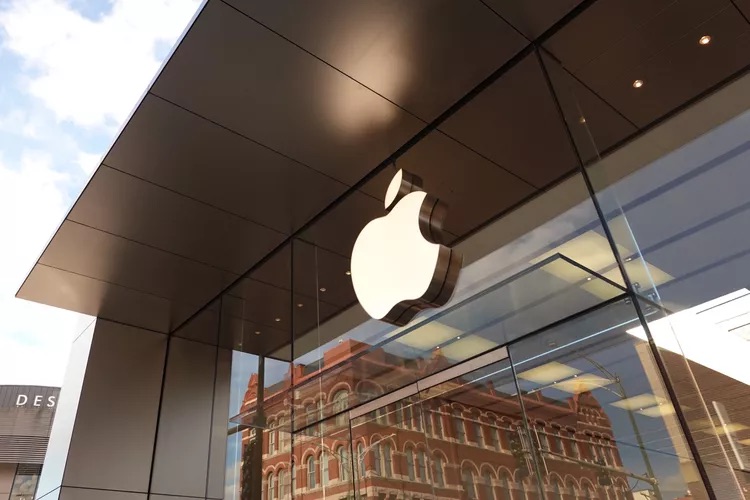
Technology stocks and semiconductor manufacturers are on the front line. STMicroelectronics lost over 8% over the week, falling to 63.47 euros. Soitec dropped by more than 6%, despite an extraordinary performance since January 1st, with a gain of over 419%. The scenario is repeating itself on Wall Street: without positive news, tech capitalizations are suffering from profit-taking, fueled by expectations of a faster-than-expected rise in US interest rates. Apple’s stock is crystalizing much of these concerns. The company fell by 6% on the stock market following the announcement of a price increase, attributed to surging memory chip costs. The market fears that more expensive devices will eventually weigh on demand.
We are now seeing the emergence of a new inflation: AI-flation Artificial intelligence was the real overarching theme of the week. Memory manufacturers like Samsung, SK Hynix, or Micron are now prioritizing more profitable data center orders, to the detriment of consumer computers, tablets, and smartphones.
Direct consequence: RAM prices could climb by 130% in 2026. Microsoft even expects storage costs could double by autumn 2027. The group has incidentally announced a price hike on its Xbox consoles, with the Series S going from $400 to $500 in the US. This phenomenon, already dubbed “AI-flation”, is becoming a tangible issue for consumers and markets alike, who are beginning to question the future impact on tech giants’ margins.
SpaceX, still under pressure
SpaceX remains in the spotlight, two weeks after its IPO. On Monday, June 22, the stock plunged by over 16% intraday, its worst session since it began trading, dragged down by a generalized tech sell-off. The company nonetheless remains 31% above its IPO price, proof of underlying momentum that is resisting short-term volatility.
COMMODITIES
Oil
Oil is experiencing a week of sharp pullback, amid the gradual normalization of traffic in the Strait of Hormuz. The weekly decline is severe: Brent and WTI are heading towards a drop of about 8% over the week. On Friday, June 26, Brent surrendered over 4%, at $71.99 a barrel. WTI fell by 3.7%, to $69.23. These are levels comparable to those observed before the conflict in Iran erupted in February 2026. The week was not quiet, however. On Thursday, June 25, a cargo ship was hit by an unidentified projectile near the coast of Oman while attempting to cross the strait. Two US officials assert that Iran was behind the strike. The incident prompted the International Maritime Organization to temporarily suspend its sailor evacuation program, which had already allowed the exit of 115 ships and 2,500 people from the Gulf. The market initially reacted with a jump: Brent and WTI surged by over 2% on Thursday. But the fear quickly subsided. By Friday, prices fell back, as operators noted that maritime traffic was continuing despite the attack, with some ships taking routes not approved by Tehran. Saudi Aramco even resumed loading at its Ras Tanura terminal after a nearly four-month interruption. Analysts remain cautious regarding the outlook. According to ING, a large part of the traffic rebound is mainly due to the departure of ships previously blocked in the Gulf, rather than a genuine return to normal. Iraq, for its part, is pressing OPEC to increase its production quotas, which would further reinforce expectations of a supply surplus in 2027.
Gold
Gold ended the week on a defensive note, but regained some ground towards the end of the period. This week, the trend remains fragile, as the dollar hit its highest level in over a year against major currencies, making gold more expensive for holders of other currencies. On Thursday, June 25, the US inflation report came in broadly in line with expectations. This news eased fears of an imminent monetary tightening. Gold rebounded modestly, crossing back above $4,000 an ounce, supported by a weaker dollar and slightly retreating bond yields. Market expectations, however, remain clearly geared towards a stricter policy. Traders are now pricing in an 80% probability of a Fed rate hike in December, compared to about 63% for a hike in September. Despite Thursday’s rebound, gold remains down roughly 5% year-to-date, far from its all-time high in January. The parallel decline in oil, back to pre-conflict levels, also works against gold. By mitigating inflationary fears, it removes one of the pillars that had supported the precious metal in recent months. The $4,000 threshold thus remains the key dividing line to monitor.
Cette analyse a-t-elle été utile à votre allocation ?
Attribuez une note de 1 à 5 étoiles (réservé aux membres Horacle Capital).

Raphaël Chouraqui
Writer
Passionate about economics and market finance. Raphaël brings his expertise in decoding macroeconomic cycles and contributes to writing Horacle Capital's analyses.
Learn more about the author →Go further with our models
Get the weekly biases of our models by email, or open the full platform.